PythonTypeScriptFastAPINext.jsMongoDBRedis
Ratelane
API observability and live policy control plane for FastAPI — rate limiting, route policies, and fleet visibility without redeploying code.
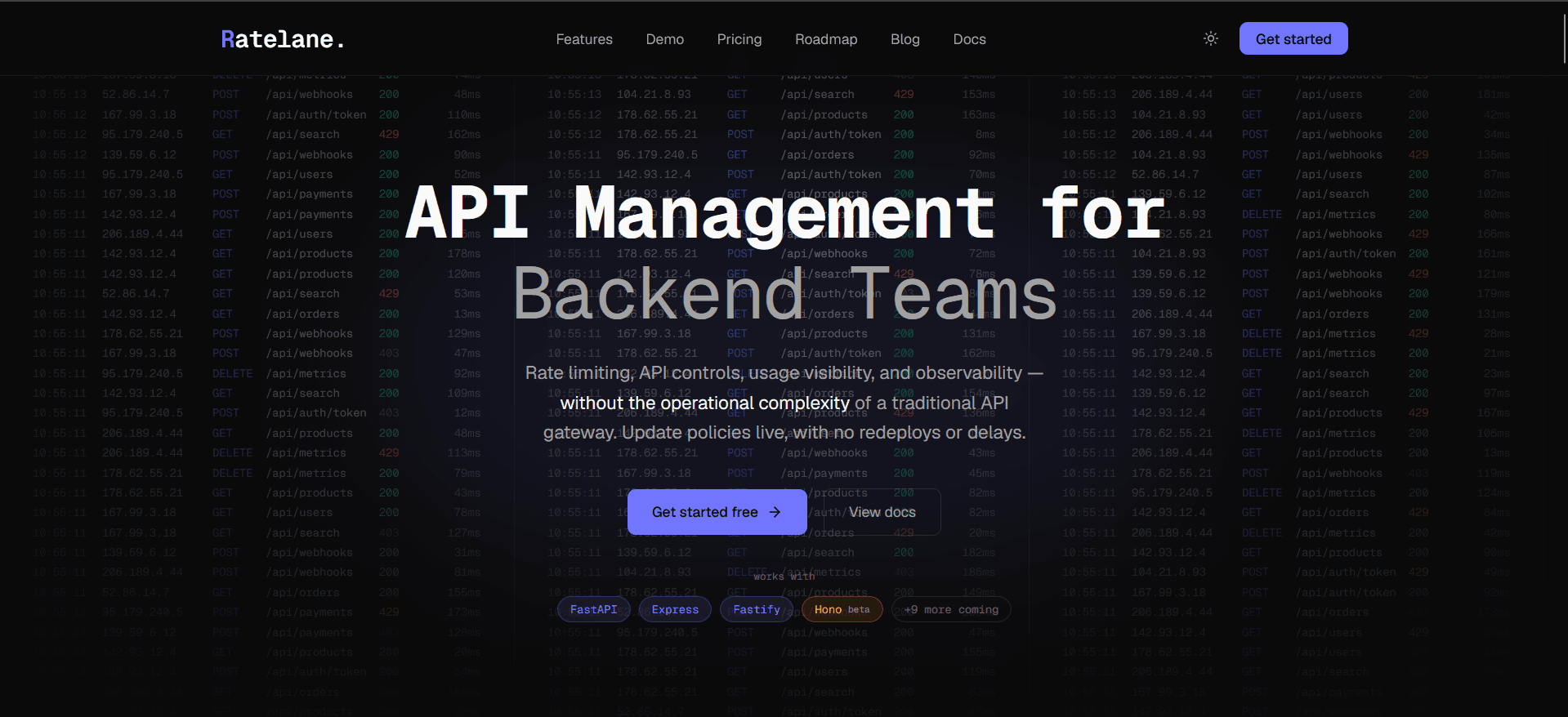
Ratelane is an API observability and live policy control plane for backend teams. Developers install a lightweight SDK, and it starts reporting telemetry and enforcing rate limits, route rules, and CORS policies — all controllable live from a dashboard, with zero code redeploys. Built framework-agnostic, with Python and JS SDKs shipped and support expanding across the ecosystem (Flask, Django, Spring Boot, ASP.NET Core, Gin, Echo, Rails, Laravel, NestJS).
Key features
- Zero-downtime policy updates — changes propagate to running instances in under 10 seconds via signature-based polling, with no live network call in the request path.
- Emergency Profile fallback — a customer-defined safety policy that auto-activates if the policy server becomes unreachable, and auto-reverts on reconnect.
- Fleet visibility — see every running instance, its sync status, and health at a glance, a differentiator most rate-limiting tools don't offer.
- Full analytics — request/error trends, latency percentiles, and log filtering across instances, with plan-based data retention.
- Reliable telemetry pipeline — Redis-streamed ingestion with a worker pool, dead-letter queue, and automatic retry/reclaim on crashed workers.
What I built
- Python and JS SDKs, published as packages
- FastAPI + MongoDB backend with JWT/API-key auth, admin panel, and promo code system
- Next.js dashboard (TypeScript, shadcn/ui, Recharts) with a live policy editor and alerting
- Full billing lifecycle integrated with Dodo Payments, webhook-driven
- Self-managed VPS deployment (nginx, systemd, Cloudflare), dashboard/landing on Vercel, docs on Fumadocs
Live in production with paying customers.